Keith Vaughan

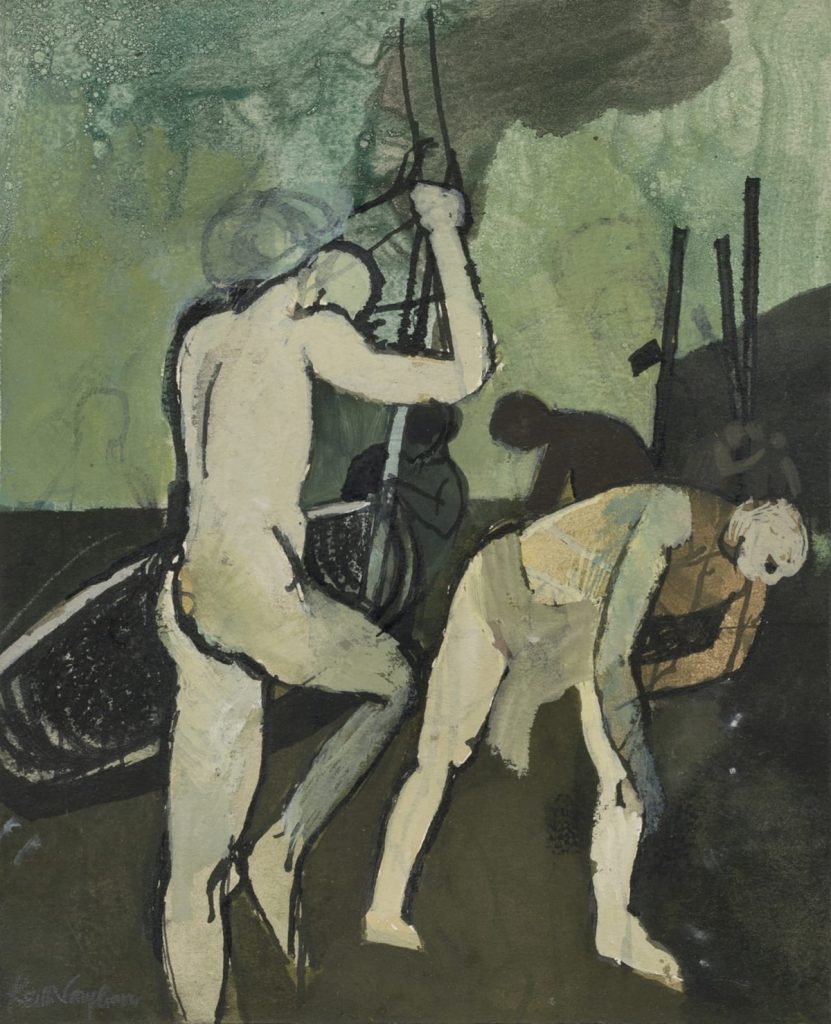
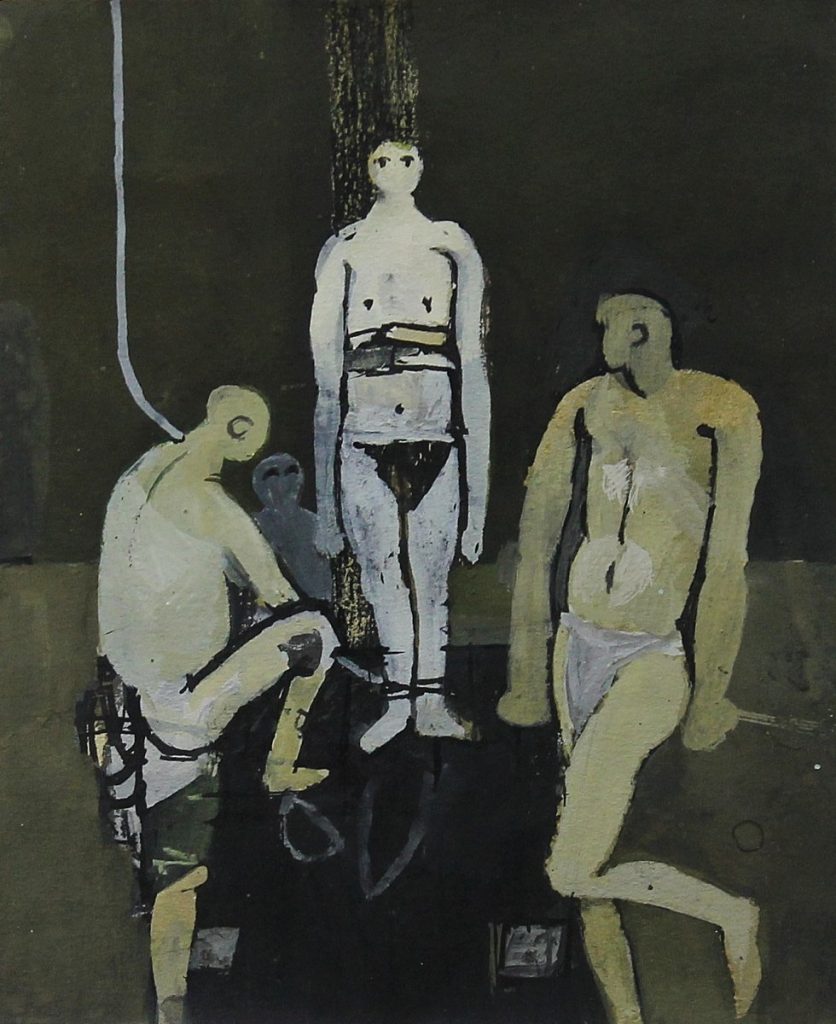
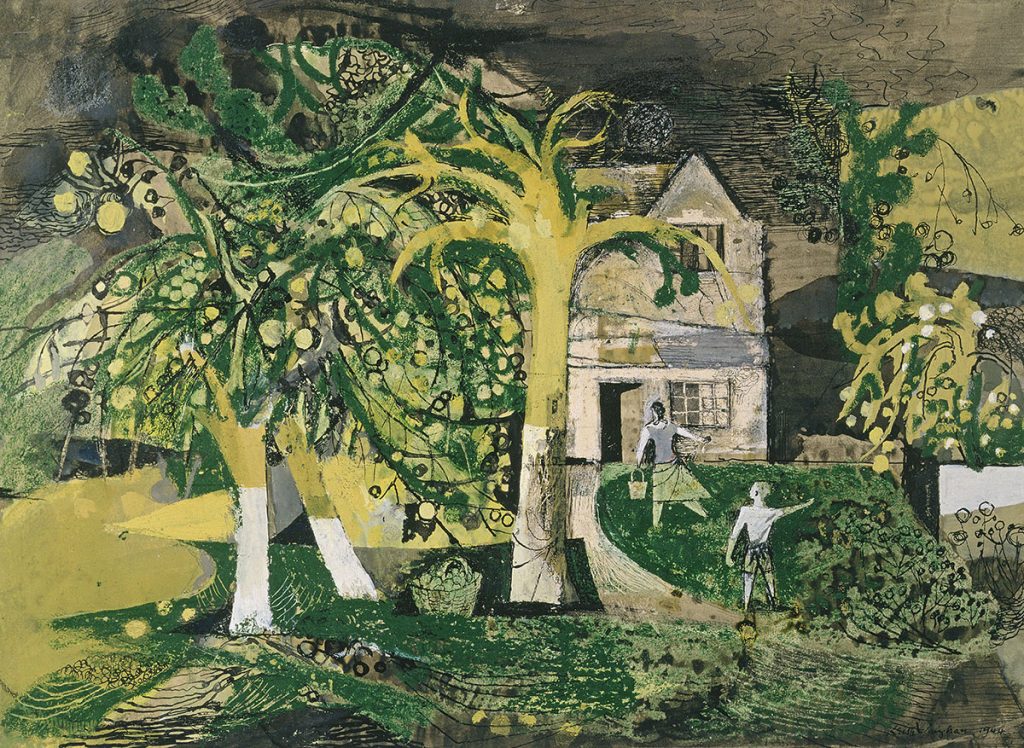
Keith Vaughan (1912–1977), was a British painter known for his distinctive style and profound exploration of the human form. Remarkably, he was self-taught, a testament to his natural talent and deep passion for art.

During World War II, Vaughan developed close friendships with fellow artists Graham Sutherland and John Minton. After the war, he shared a studio with both Sutherland and Minton, and these connections brought him into the Neo-Romantic circle, a group of artists who sought to revive the romanticism of earlier British landscape painters. However, Vaughan soon developed a unique style that set him apart from the Neo-Romantics. His work began to focus on studies of the male figure, gradually becoming more abstract as his career progressed.

Vaughan’s paintings are often noted for their serene stillness and the ethereal green light that seems to suffuse his scenes, giving them an otherworldly quality. This atmosphere is one of the reasons I have kept returning to his work – it settles his figures in a landscape of seeming melancholy.

In addition to his paintings, Vaughan is also remembered for his deeply personal journals. These writings offer a candid look into his inner life, revealing his struggles as a gay man in a time when homosexuality was socially and legally condemned. Selections from his journals were published during his lifetime in 1966, and a more comprehensive edition was released in 1989, offering further insight into his thoughts, creative process, and the challenges he faced.

Keith Vaughan’s legacy endures through both his art and his journals, providing a moving portrait of a man who channelled his inner conflicts into a rich and evocative body of work. A gay man troubled by his sexuality, he is known largely through those journals.
Michael Ayrton

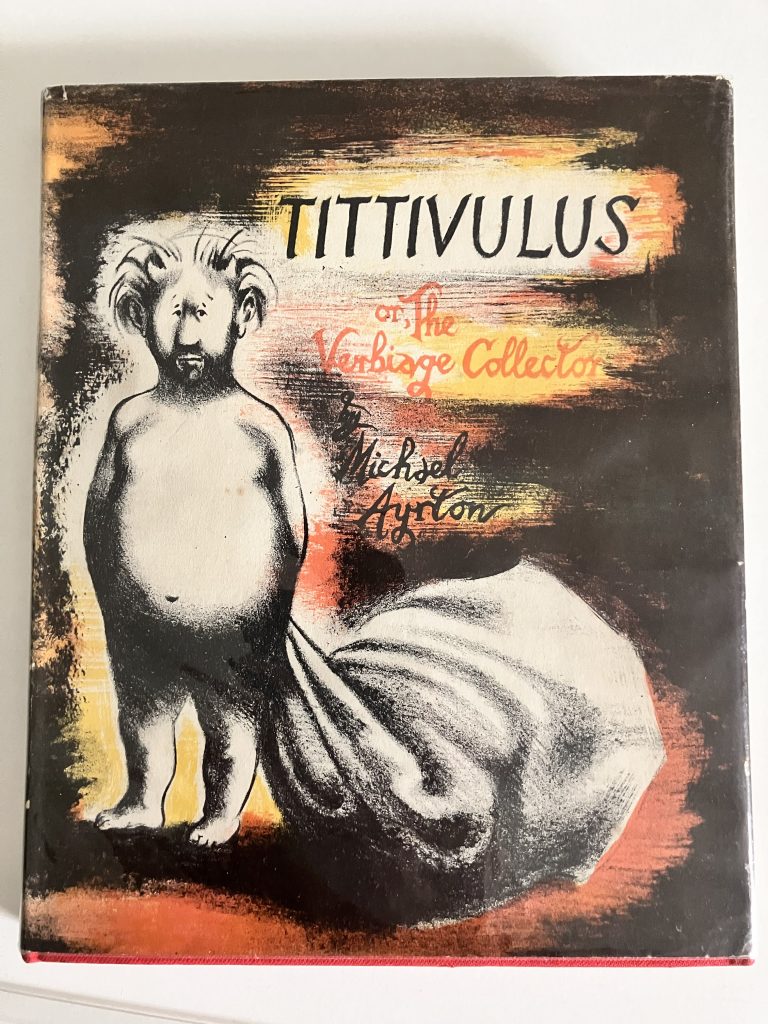
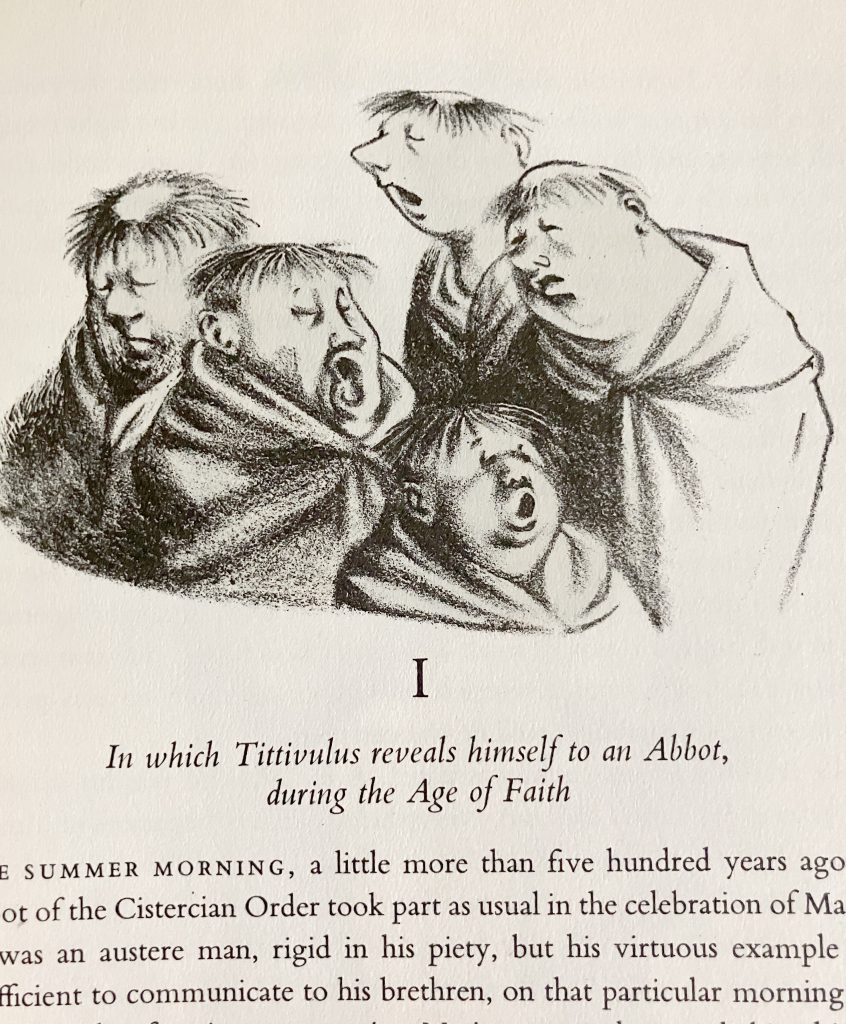
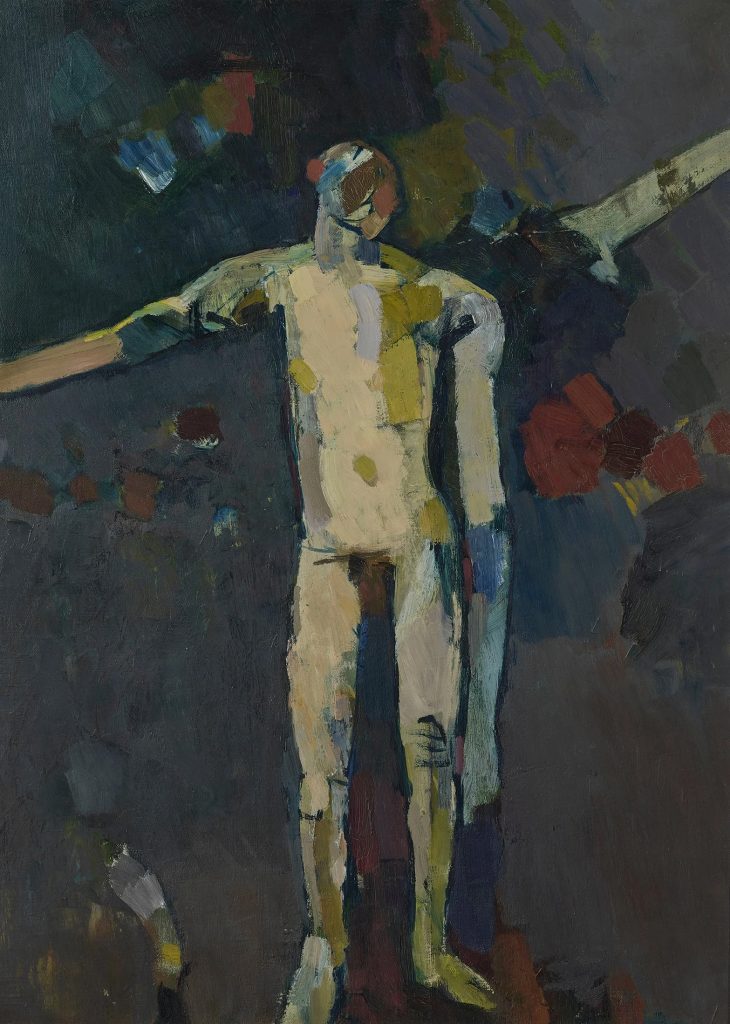
Michael Ayrton (1921–1975) was a versatile British artist whose work spanned painting, printmaking, sculpture, criticism, broadcasting, and novel writing. His artistic oeuvre is deeply infused with themes of flight, mythology, mirrors, and mazes, reflecting his fascination with both the physical and psychological landscapes these symbols evoke.

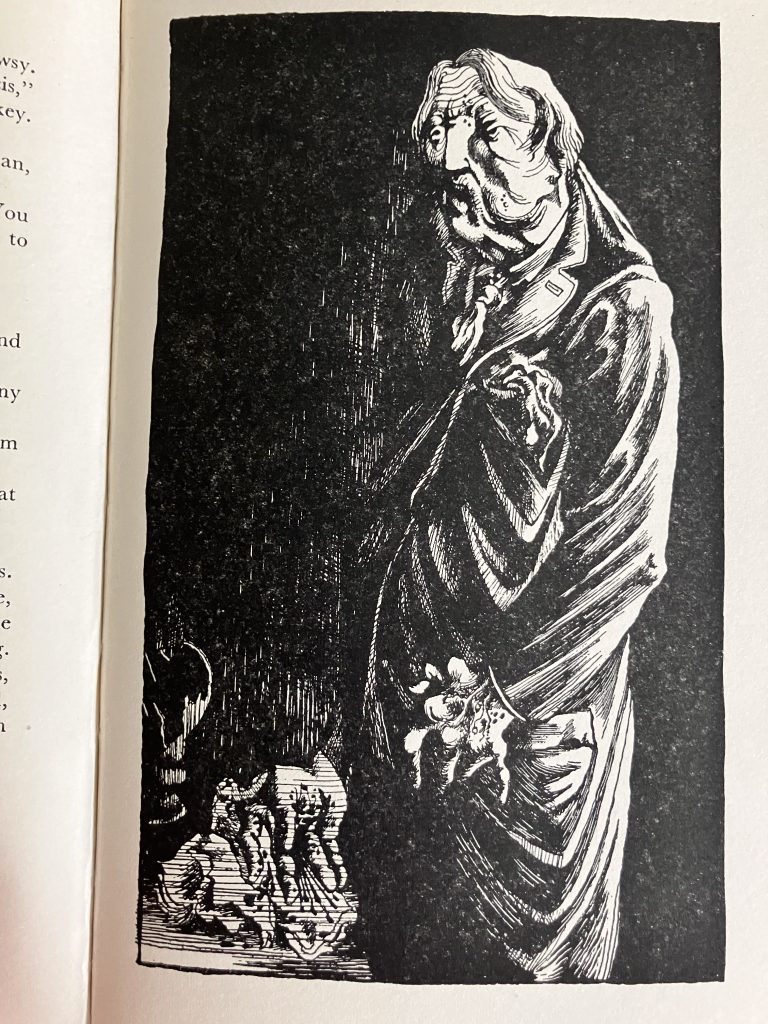
I first encountered Ayrton’s work through his illustrations in several books I own, including Poems of Death (1945), Tittivulus or The Verbiage Collector (1953), and his evocative drawings for Oscar Wilde’s The Picture of Dorian Gray. These illustrations showcase Ayrton’s ability to blend narrative with visual art, imbuing each work with a haunting, almost mythic quality.

Initially associated with the English Neo-Romantic movement, Ayrton was influenced by artists such as Pavel Tchelitchew, Henry Moore, and Graham Sutherland. This influence is evident in his early works, which embody the Neo-Romantic style’s emotional depth and complex symbolism. Ayrton’s unique vision and intellectual curiosity allowed him to create art that resonates with both personal and universal themes, making him a distinctive voice in 20th-century British art.

Lynd Ward

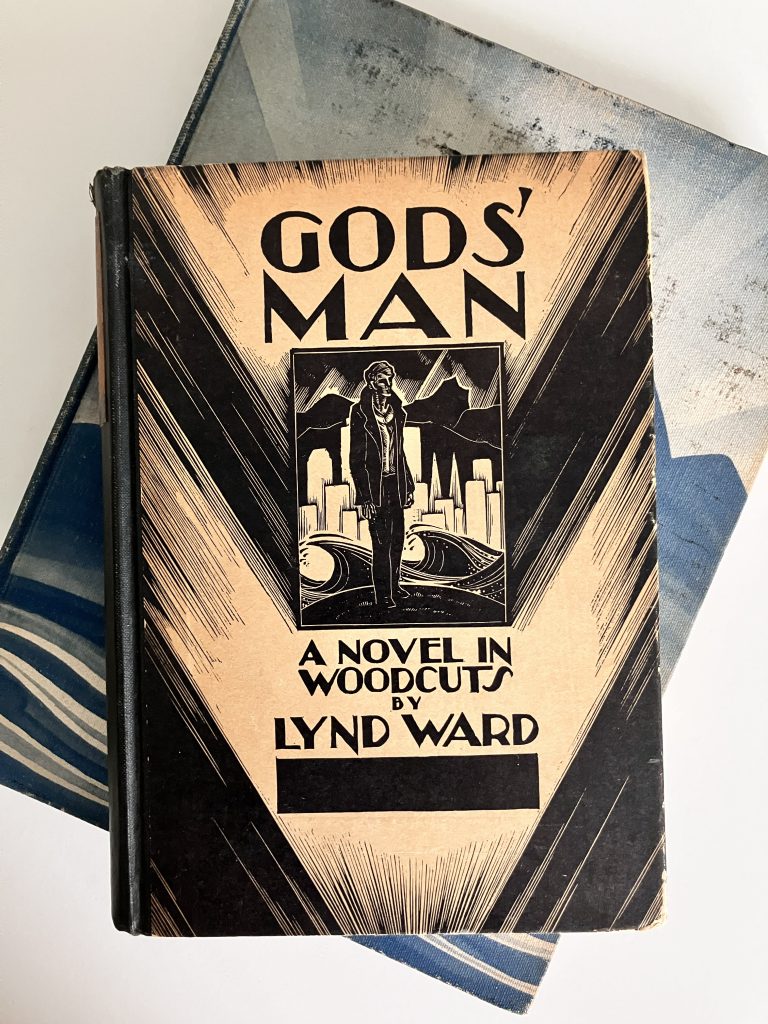
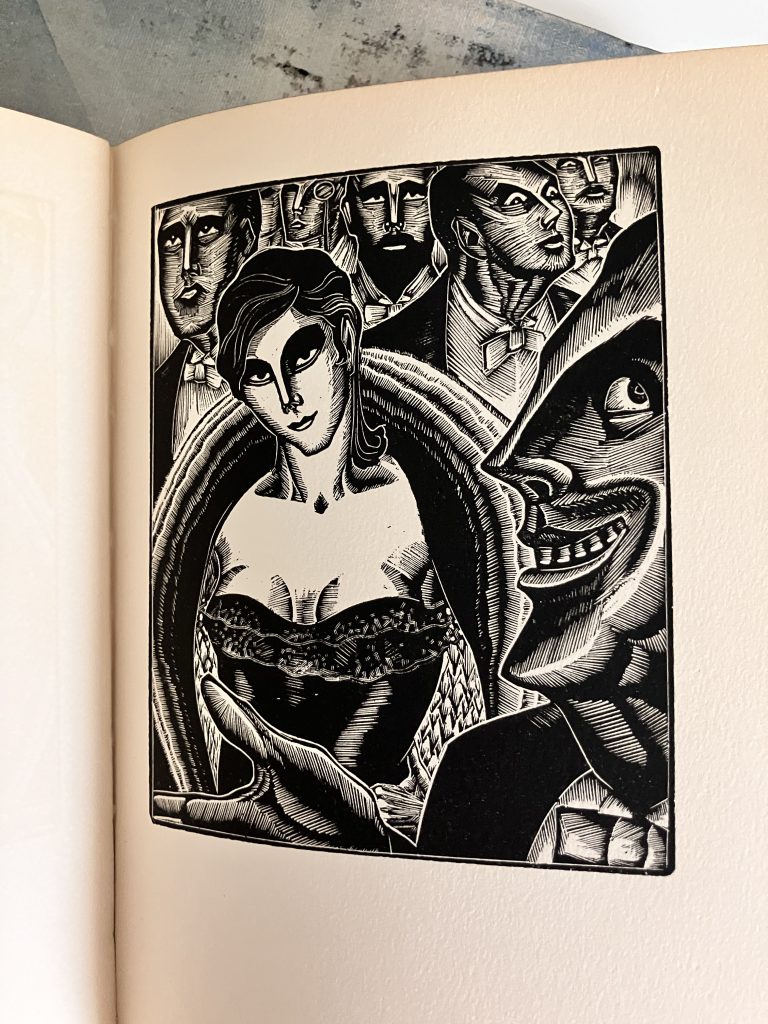
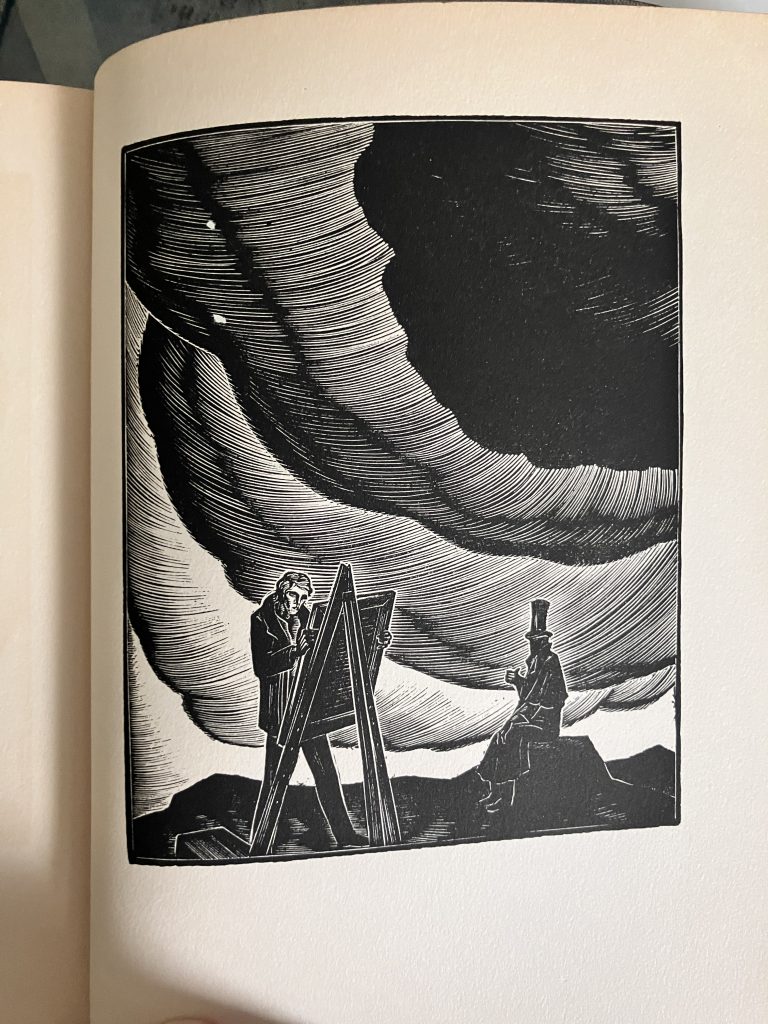
Lynd Kendall Ward (1905–1985) was a prominent American artist and novelist, best known for his pioneering work in the medium of wordless novels using wood engraving. His artistic approach, combining expressionist and art deco elements, created a striking visual language that spoke volumes without the need for words.

My introduction to Ward’s work came as a friend’s gift of Gods’ Man, his first graphic novel, published in 1929. This wordless tale, rendered entirely in wood engravings, tells a haunting Faustian story of a struggling artist who is mysteriously given a paintbrush that transforms his fortunes—though not without a dire cost. The narrative’s powerful imagery and themes explore the intersections of art, ambition, and morality, making it a compelling and timeless piece.

Interestingly, the book’s initial working title was “All art is useless,” a provocative statement that contrasts sharply with the final title, Gods’ Man. The title’s use of the plural “Gods” reflects the idea that “the Artist is always the darling of the Gods,” hinting at the divine or fateful influences that guide—and sometimes torment—creative souls. Ward’s work, both in this novel and throughout his career, remains a significant contribution to the art of storytelling through visual means.

I also came across his poem:

God’s Man

Whose hand is this that
Bestows the brush
And bids me paint herewith –
The light
The shade
The heighth
The depth
Of man’s brief early life.

Whose hand is this that
Points the way
And bids me follow on –
To joy
To pain
To peace
Despair
And ever on and on.

Whose gaze is this that
Plumbs the heart
And bids me drain the cup of life –
Its good
Its bad
Its flesh
Its soul
And coldly gazes on.

Whose grasp is this that
Reaches out
to seize ny ransomed life –
To chill
To kill
To damn
To laugh
’Tis Death who loans us life.

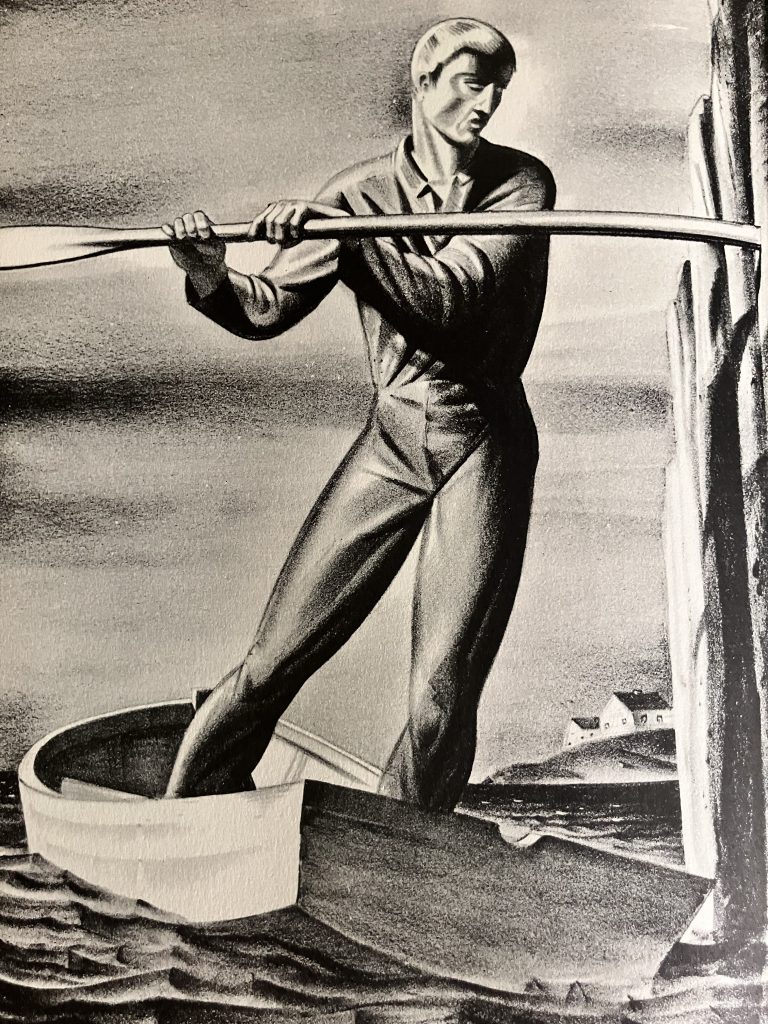
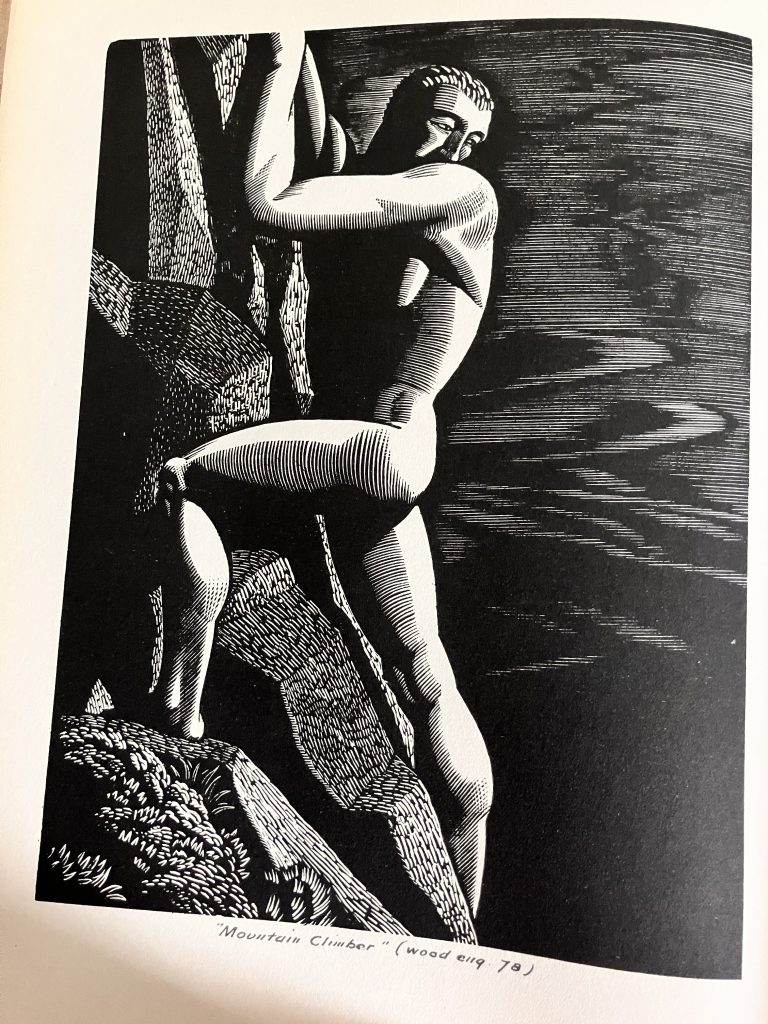
Rockwell Kent

Rockwell Kent (1882–1971) was a multifaceted American artist and adventurer whose work spans painting, printmaking, illustration, and writing. Particularly admired for his pen, brush, and ink work—often mistaken for woodcuts—Kent’s modernist designs from the 1930s stand out as elegant, timeless, and deeply evocative of the era. His dramatic compositions, frequently figurative, reflect a profound connection to the landscapes he cherished, rendering human figures as monumental and integrated with nature.

Kent’s art captures both the majesty and mystique of the natural world, making him a revered figure for his ability to evoke the sublime. From a contemporary perspective, he emerges as an early advocate for eco-consciousness in art. His statement, “I’m not trying to make people love my art. Through my art, I’m trying to make people love nature. That’s all,” highlights his commitment to using art as a medium to inspire a deeper appreciation and respect for the environment. His work remains a testament to the enduring beauty of nature and the timeless elegance of his artistic vision.