
Keith Vaughan (1912–1977), was a British painter known for his distinctive style and profound exploration of the human form. Remarkably, he was self-taught, a testament to his natural talent and deep passion for art.
During World War II, Vaughan developed close friendships with fellow artists Graham Sutherland and John Minton. After the war, he shared a studio with both Sutherland and Minton, and these connections brought him into the Neo-Romantic circle, a group of artists who sought to revive the romanticism of earlier British landscape painters. However, Vaughan soon developed a unique style that set him apart from the Neo-Romantics. His work began to focus on studies of the male figure, gradually becoming more abstract as his career progressed.
Vaughan’s paintings are often noted for their serene stillness and the ethereal green light that seems to suffuse his scenes, giving them an otherworldly quality. This atmosphere is one of the reasons I have kept returning to his work – it settles his figures in a landscape of seeming melancholy.
In addition to his paintings, Vaughan is also remembered for his deeply personal journals. These writings offer a candid look into his inner life, revealing his struggles as a gay man in a time when homosexuality was socially and legally condemned. Selections from his journals were published during his lifetime in 1966, and a more comprehensive edition was released in 1989, offering further insight into his thoughts, creative process, and the challenges he faced.
Keith Vaughan’s legacy endures through both his art and his journals, providing a moving portrait of a man who channelled his inner conflicts into a rich and evocative body of work. A gay man troubled by his sexuality, he is known largely through those journals.
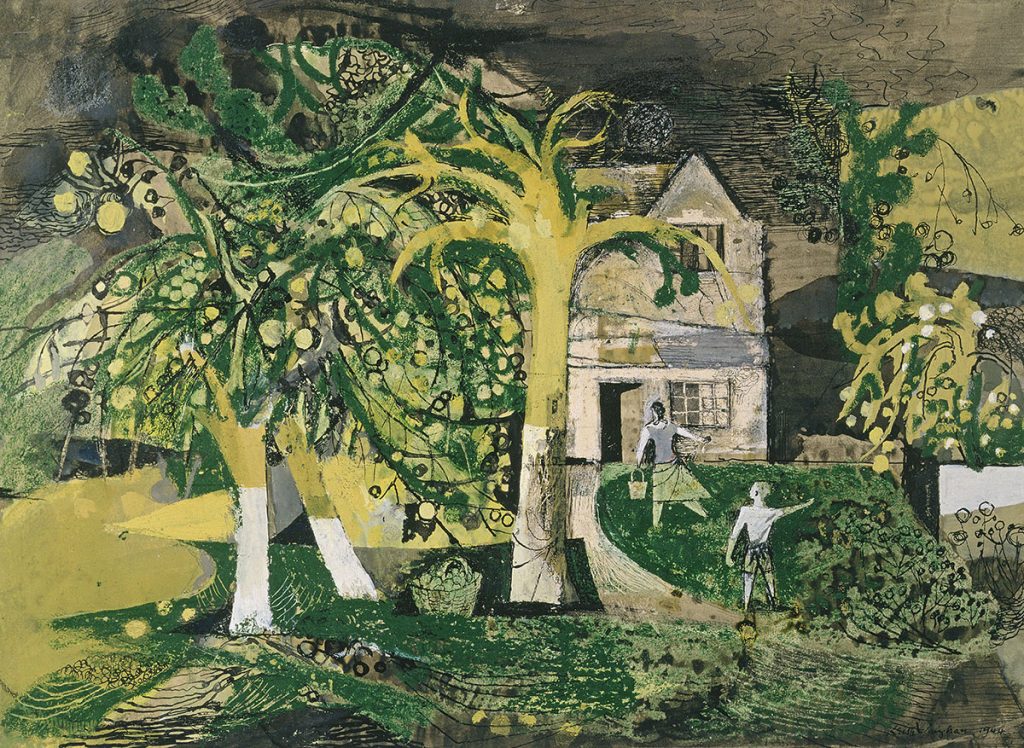
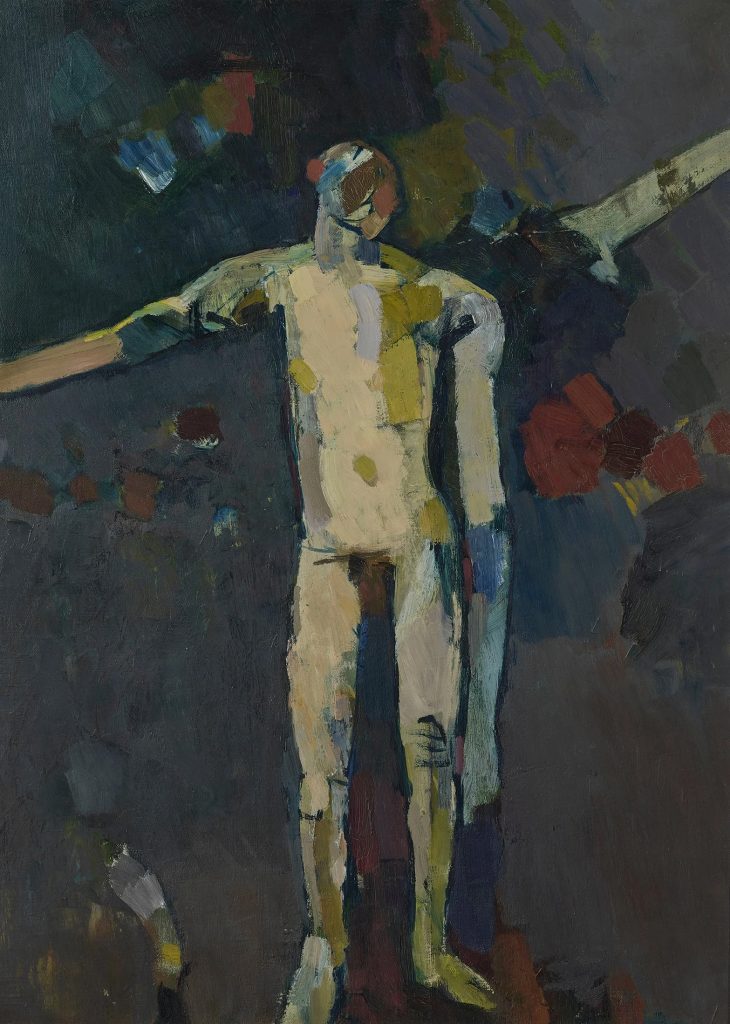
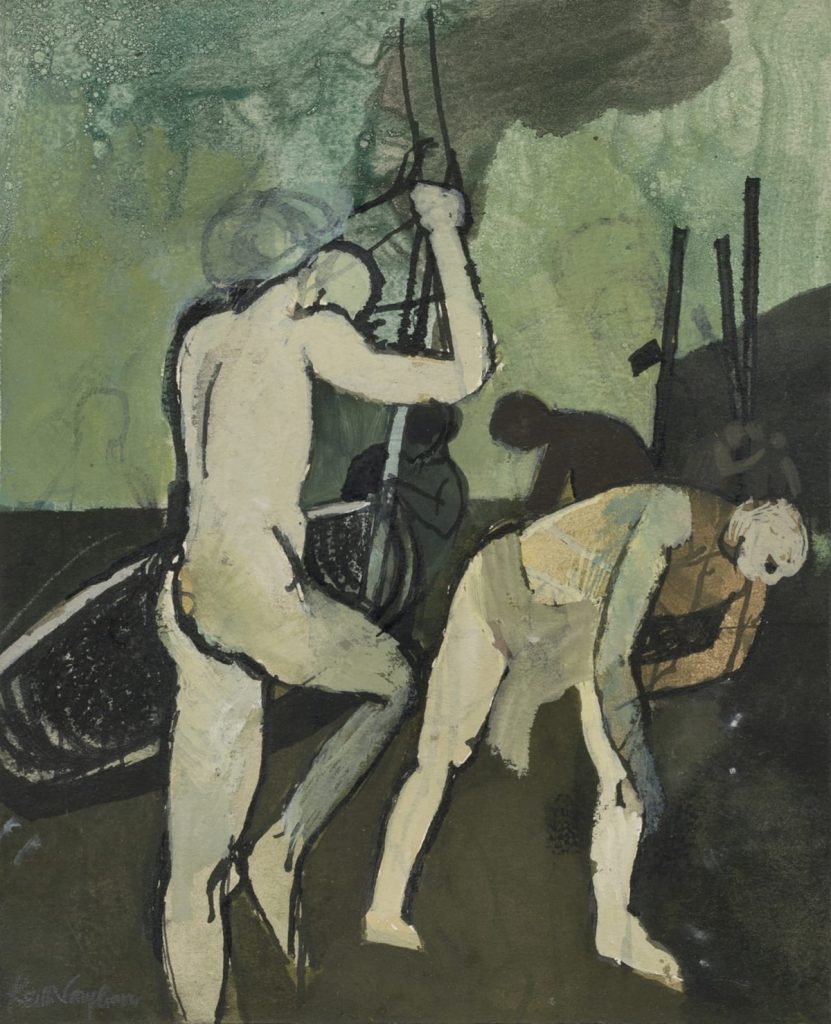
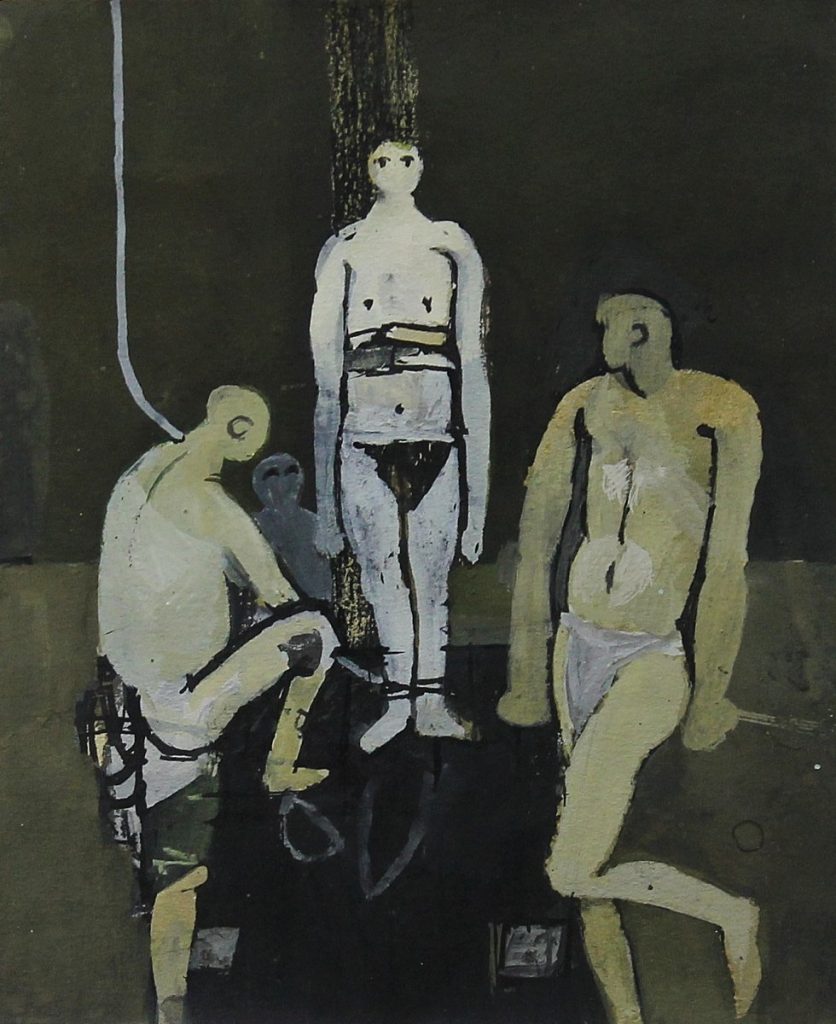
Fascinated by the style of the human form.. naive but engaging. Also the colour palettes.