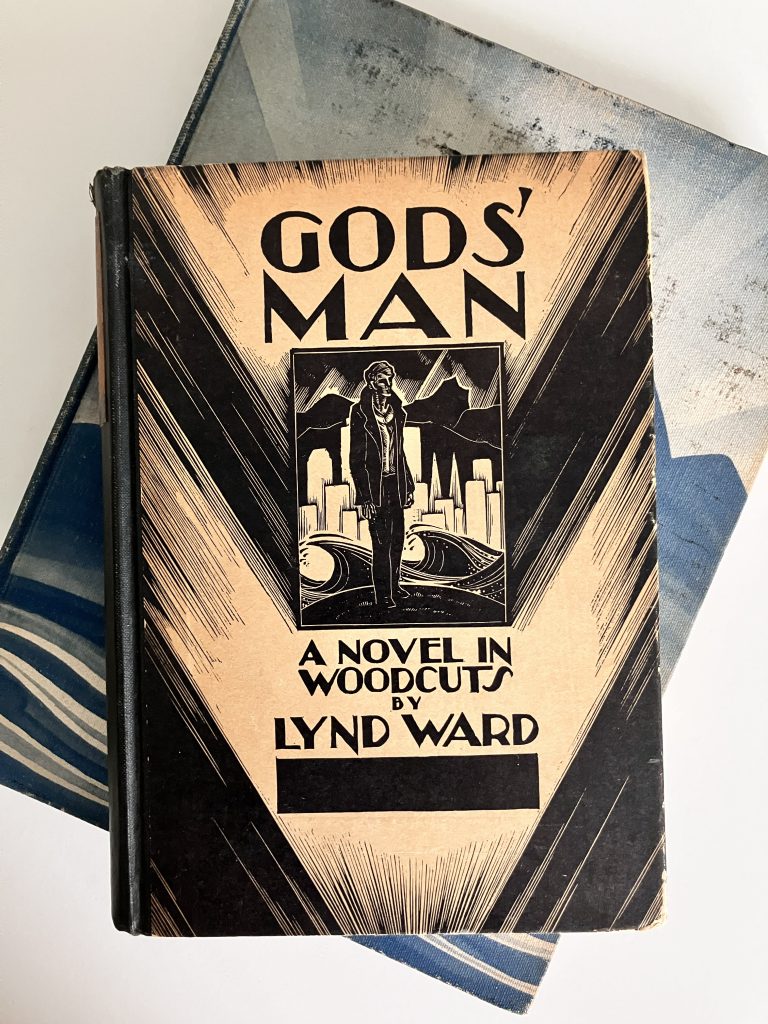
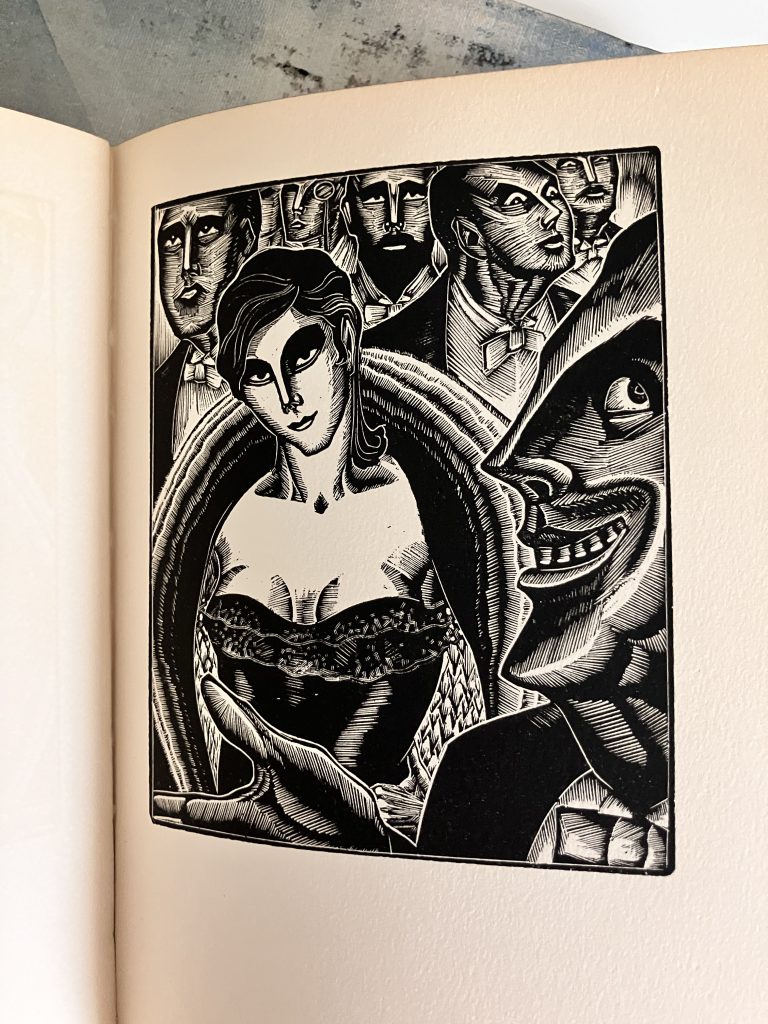
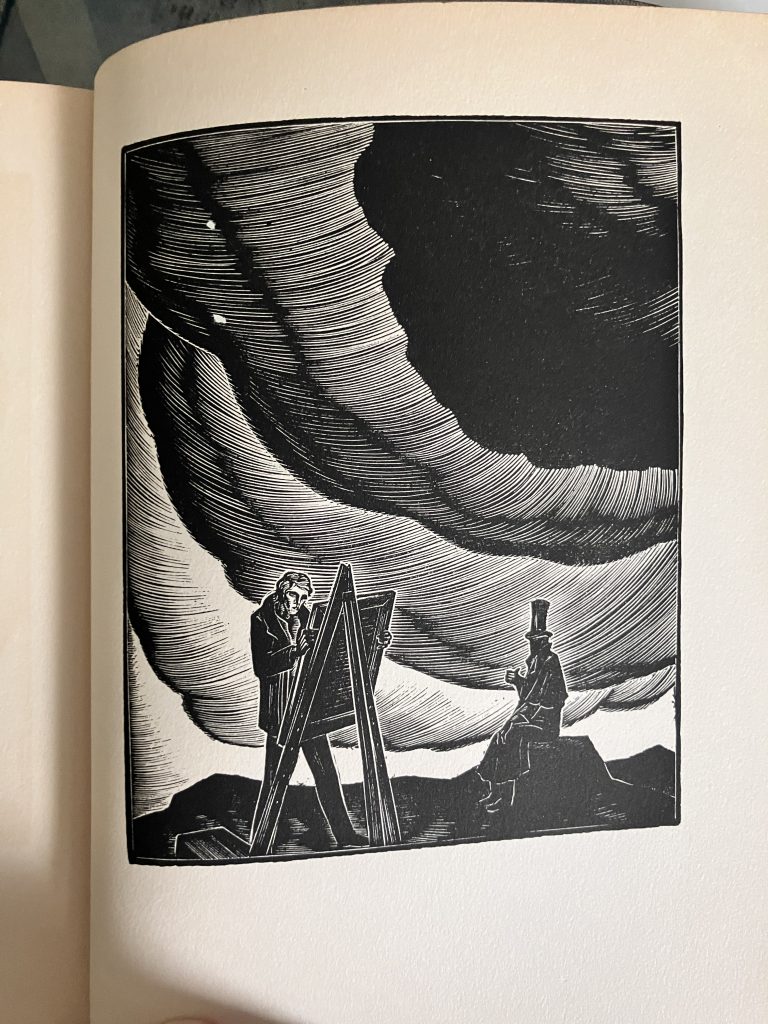
Lynd Kendall Ward (1905–1985) was a prominent American artist and novelist, best known for his pioneering work in the medium of wordless novels using wood engraving. His artistic approach, combining expressionist and art deco elements, created a striking visual language that spoke volumes without the need for words.
My introduction to Ward’s work came as a friend’s gift of Gods’ Man, his first graphic novel, published in 1929. This wordless tale, rendered entirely in wood engravings, tells a haunting Faustian story of a struggling artist who is mysteriously given a paintbrush that transforms his fortunes—though not without a dire cost. The narrative’s powerful imagery and themes explore the intersections of art, ambition, and morality, making it a compelling and timeless piece.
Interestingly, the book’s initial working title was “All art is useless,” a provocative statement that contrasts sharply with the final title, Gods’ Man. The title’s use of the plural “Gods” reflects the idea that “the Artist is always the darling of the Gods,” hinting at the divine or fateful influences that guide—and sometimes torment—creative souls. Ward’s work, both in this novel and throughout his career, remains a significant contribution to the art of storytelling through visual means.
I also came across his poem:
God’s Man
Whose hand is this that
Bestows the brush
And bids me paint herewith –
The light
The shade
The heighth
The depth
Of man’s brief early life.
Whose hand is this that
Points the way
And bids me follow on –
To joy
To pain
To peace
Despair
And ever on and on.
Whose gaze is this that
Plumbs the heart
And bids me drain the cup of life –
Its good
Its bad
Its flesh
Its soul
And coldly gazes on.
Whose grasp is this that
Reaches out
to seize ny ransomed life –
To chill
To kill
To damn
To laugh
’Tis Death who loans us life.